

Strong Enough To Be Gentle


Settle In
Hello, friend.
I’m glad you’re here.
This week’s reflection is about the quiet work of carrying one another with gentleness. Most of us know someone who is holding more than they are saying. And, if we’re honest, some weeks that person is us.
So pour a cup of coffee or tea, take a breath, and settle in. Let’s think together about what it means to offer the steady, patient presence of Christ to those who are weary.
Please remember that you can listen to me read this edition by pressing the audio button above the opening photo. Also, there is a special announcement about the Shepherding Minds eBook at the end of this edition of the Digest.
Ok, with that out of the way, let’s dive into this week’s post.
What I’m Thinking
“We who are strong ought to bear with the failings of the weak and not to please ourselves.”
Romans 15:1
Some burdens announce themselves. Others sit quietly beside us in the church pew.
They show up in the person who smiles when greeted but hopes no one asks a second question. In the caregiver who says, “We’re managing,” though sleep has become thin and patience even thinner. In the pastor who moves from one hurting person to another and wonders where to put his own weariness. In the parent who sits in the driveway for a few minutes before going inside because the house requires more than they feel able to give.
Paul writes, “We who are strong ought to bear with the failings of the weak and not to please ourselves.”
There is something steady and unhurried in that word bear. It means more than tolerating someone. More than quietly wishing they would pull themselves together. It suggests carrying a weight that does not belong to us simply because love has placed us near the person who is carrying it. That sounds beautiful.
It can also be exhausting. Sometimes another person's weakness interrupts our plans, complicates our conversations, or demands patience we don’t feel we possess. We may care deeply and still feel frustrated. We may want to help and have no idea what to say. We may listen to someone tell the same painful story again and wonder why they cannot move forward.
I don’t always get this right. I have sometimes confused urgency with care. I have tried to solve what needed to be heard, explain what needed to be felt, or encourage someone before I had fully entered the ache they were carrying.
But Romans 15 reminds us that God strengthens His people through His people. He often places His care into ordinary hands like ours and invites us to carry one another gently.
We see this most clearly in Jesus. He did not stand at a safe distance from human weakness. He touched those others avoided. He welcomed the ashamed. He stopped for people who interrupted Him. He wept beside grieving friends even though He knew resurrection was coming. Jesus never treated suffering people as inconveniences or projects. He came near. And at the cross, He carried what none of us could carry for ourselves.
This matters for the person living with anxiety, grief, depression, trauma, or emotional exhaustion. Pain does not always respond to explanation. A weary soul often needs safety before it can receive instruction. Anxiety may not disappear because someone quotes the right verse. Grief does not move according to our timetable. Shame rarely loosens its grip through correction alone.
Sometimes what a hurting person needs first is a steady presence. Someone who stays. Someone who listens without turning the conversation back toward themselves. Someone who does not require them to become less complicated before offering love.
I think of a small boat being tossed by rough water beside a dock. The dock does not calm the wind or stop the waves. It simply provides something steady to hold onto. A place to tie off. A place where the boat can stop drifting long enough to regain its balance.
Perhaps that is what bearing with the weak can look like. Not carrying every burden forever. Not neglecting our own limits. Not pretending we are endlessly strong. But offering enough steadiness for another person to breathe, tell the truth, and remember that they are not alone. And sometimes we are the small boat.
Romans 15 is not a permanent division between the strong and the struggling. The roles change. Today, I may be the dock that steadies you. Tomorrow, I may need you to hold me close when the water becomes rough. This is part of the mercy of the community: no one is required to remain steady all the time.
The weary do not always need a speech. Sometimes they simply need someone willing to stay beside them until the waves settle.
A Gentle Invitation
This week, look for one person who may be carrying more than they are saying. Slow down long enough to notice them. Ask a sincere question, listen without rushing to fix what hurts, and offer the quiet assurance of your presence.
You may not be able to remove their burden, but you can help them carry it. Sometimes gentleness is the clearest way we show someone the heart of Christ.
Questions to Sit With
Who in my life may be carrying more than they are able or willing to say out loud?
When someone is struggling, do I tend to listen patiently, or do I move too quickly toward advice, correction, or solutions?
Where might I need to admit my own weakness and allow someone else to help carry what has become too heavy?
What would it look like for me to offer one person a steady, gentle presence this week?
A Closing Prayer
Lord Jesus,
Help me notice those who are weary and respond with patience, compassion, and gentleness. When I am strong, teach me to serve. When I am weak, help me receive care. Make my presence a safe place where others feel seen and less alone.
Amen.
Benediction
May the Lord give you strength to carry the weary, gentleness to hold what others cannot yet name, and humility to receive care when your own burden becomes heavy.
May your presence reflect the patient love of Christ, and may no one who walks beside you feel they must carry life alone.
Song To Sit With
“His Mercy Is More” beautifully reflects the truth that God does not withdraw from us because of our weakness. He meets our failures, wounds, and limitations with mercy that is greater than anything we carry. Because we have been treated so patiently by Christ, we can extend that same patience to others, not minimizing their struggles or demanding quick change, but coming alongside them with gentleness, grace, and a willingness to help carry what feels too heavy.
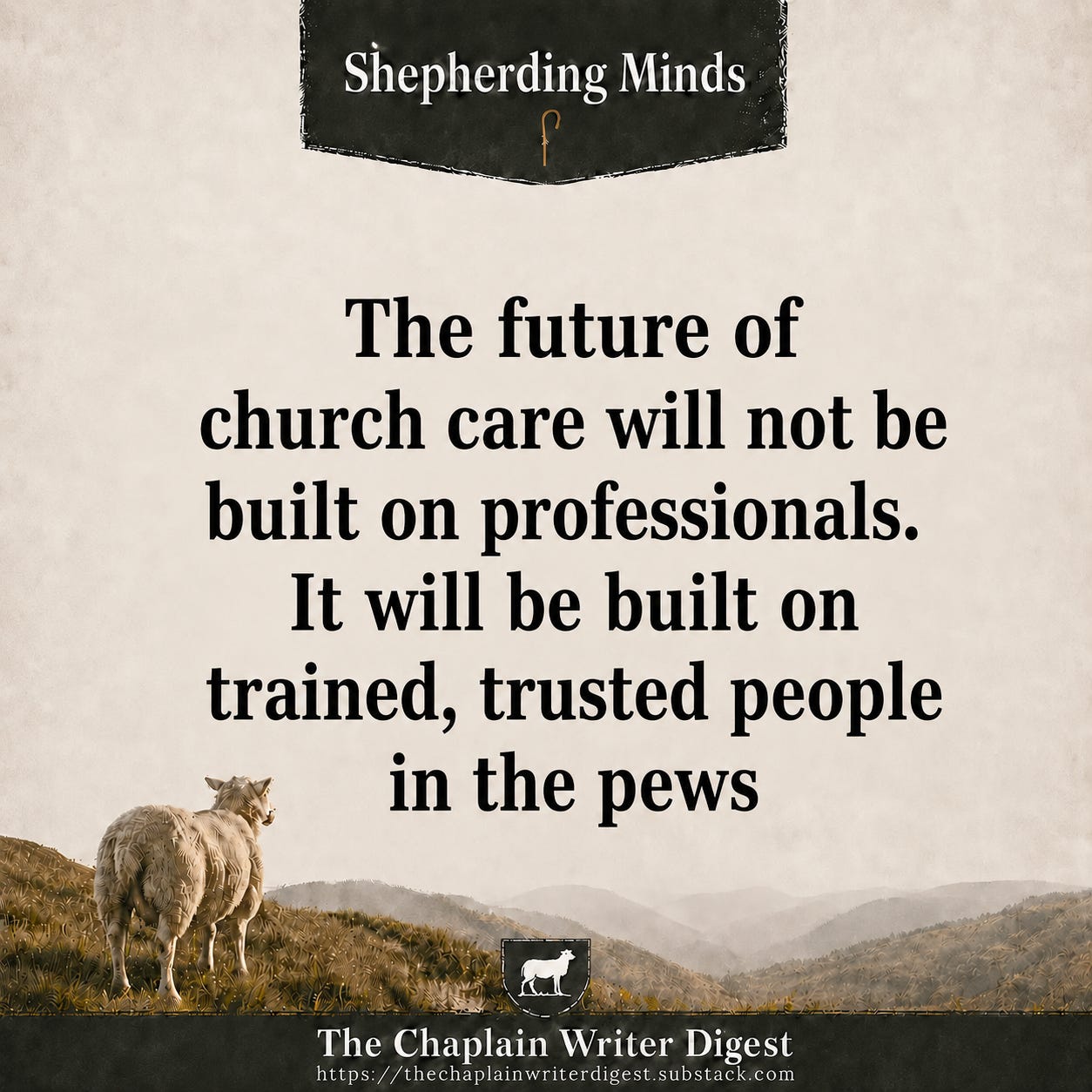
This conviction is one of the primary reasons I wrote Shepherding Minds. The church cannot depend solely on pastors, counselors, and mental health professionals to carry the growing weight of care. We must equip trained, trusted people in our congregations to recognize distress, respond with compassion, offer faithful support, and connect others with professional help when necessary. The future of church care will be built when ordinary believers are prepared to become a safe and steady presence for those who are hurting.
Shepherding Minds eBook Now Available for Pre-Order
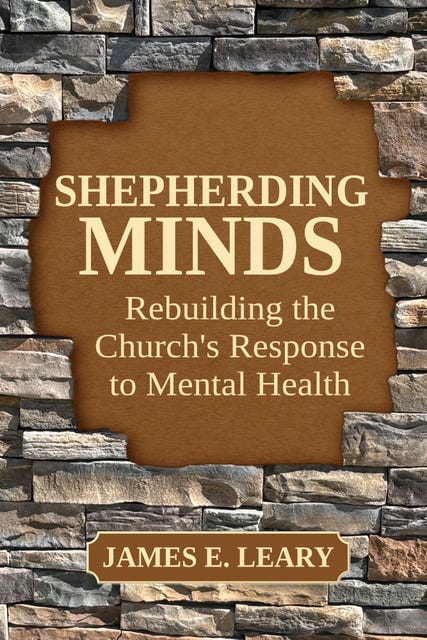
The Shepherding Minds eBook Is Now Available for Pre-Order!
Written for pastors, church leaders, care teams, chaplains, and compassionate Christians, Shepherding Minds offers practical guidance for responding to mental health struggles with greater wisdom, compassion, and confidence.
The book also traces the story of Nehemiah as a model for rebuilding the broken walls of care surrounding those who are struggling in our churches.
Pre-ordering helps build early momentum and allows this message to reach more churches, leaders, and hurting people. The eBook will be delivered on August 1.
The paperback edition should also be available for pre-order soon. Thank you for your prayers, encouragement, and support.
Leave A Voice Reflection
One of the unexpected joys of writing The Chaplain Writer Digest is hearing how these reflections meet people in the middle of real life. If something in this week’s edition encouraged, challenged, or stayed with you, I would be grateful to hear from you; a few honest words are more than enough. You can leave a brief 90-second voice message here or email me at jim@thechaplainwriter.com. And if you have not yet subscribed, I would be glad to welcome you into this growing community of weekly, freely offered reflections shaped by encouragement, perspective, and gospel-centered care.
About The Author
James E. Leary, D.Min. (Jim) is a hospice chaplain, former pastor, and author of Embracing Gethsemane: Navigating Life’s Darkest Moments, available on Amazon for readers who want to explore these themes more deeply. He writes weekly at The Chaplain Writer Digest, offering thoughtful spiritual reflections and practical encouragement for everyday faith.
Support the Work
If The Chaplain Writer Digest has encouraged you, strengthened your faith, or helped you better understand the hidden burdens people carry, I invite you to consider becoming a financial partner in this work through a voluntary pledge. Your support helps keep these weekly reflections free and accessible while also supporting the continued development of Shepherding Minds. This includes creating practical resources, training, and care-centered tools, as well as helping churches strengthen or establish shared-care ministries that put the book’s principles into practice. The Digest will remain free to everyone. Your pledge is not payment for content, but an investment in compassionate, gospel-shaped care that can equip pastors, strengthen churches, and help more people receive meaningful support within their faith communities.
📣 Share This With Someone
If today’s reflection encouraged you, consider forwarding it to a friend who might also benefit from the encouragement.
🛑 Disclaimer
This content is for inspiration and reflection and is not a substitute for professional counseling or mental health care. If you or someone you know is struggling, please reach out to a trusted professional.
© 2026 The Chaplain Writer LLC
Thanks for reading The Chaplain Writer Digest! Subscribe for free to receive new posts and support my work
I LOVED everything about this article!!!!! I wish that I could like it a million times!!!!! 😍
As someone who's primarily blessed with strong shepherding, the Lord often shows me what's happening on a heart level with an individual. I haven't always known how to meet them in their pain. But the Lord's been teaching more and more how to discern what they need. More often than not it's simply, presence. ✝️ It's all glory to Him. ✝️
Because if it was left up to "me" I wouldn't be able to open my heart in the ways that He does through me FOR them. 😍
I'm excited to read the physical copy of this when it comes out. 😍
It's SO refreshing, comforting and deeply encouraging to my heart to see someone sharing about this. 🙏✝️
Thank you for sharing this. True strength is not shown through pride, anger, or control, but through humility, gentleness, and a heart that reflects Christ. Jesus Himself said in Matthew 11:29, Learn from Me, for I am gentle and lowly in heart. It takes far greater strength to respond with grace, patience, and love than with harshness. Galatians 5:22-23 reminds us that gentleness is a fruit of the Spirit, and Colossians 3:12 encourages us to clothe ourselves with compassion, kindness, humility, gentleness, and patience. Proverbs 15:1 also says, A gentle answer turns away wrath, but a harsh word stirs up anger. We live in a world that often celebrates power without humility, but Christ calls His followers to be strong in faith while remaining gentle in spirit. Our words, attitudes, and actions should point others to Jesus, especially when we face difficult situations. As 2 Timothy 2:24-25 teaches, the Lord's servant must not be quarrelsome but kind to everyone, able to teach, patient, and correcting others with gentleness. May the Holy Spirit continue to shape our hearts so that we reflect the character of Christ in every area of our lives. May our lives be a testimony of His grace, truth, and love, bringing glory to God and encouraging others to follow Him. God bless you.