

Correcting With Kindness


Settle In
Go ahead and grab that coffee or tea, the one quietly going cold on the counter while you catch a breath. It’ll be there when you’re ready.
This is a Vacation Edition of the Chaplain Writer Digest, a little lighter than usual and missing a few of the regular pieces. But I hope what’s here still meets you where you are and leaves you a bit more encouraged than when you started. The full Digest will be back next week.
This week’s reflection is one I suspect many of us need right now, whether you’re leading a team, sitting across from someone you love in a hard conversation, or simply trying to find a way to speak truth without losing your own heart in the process.
What I’m Thinking
“And the Lord’s servant must not be quarrelsome but must be kind to everyone, able to teach, not resentful. Opponents must be gently instructed, in the hope that God will grant them repentance leading them to a knowledge of the truth.” — 2 Timothy 2:24–25 (NIV)
There is a particular kind of exhaustion that comes from conflict. The tightening in the chest before a hard conversation, the rehearsed lines that never quite land the way we hoped, the ache of being misunderstood or of misunderstanding someone else. If you lead others, you know this terrain well. Correction is rarely comfortable, and yet it is unavoidable. People we love and serve will sometimes be wrong, harmful, or hurting in ways that require a word spoken into the situation.
Paul’s charge to Timothy meets us here, not with a technique, but with a posture. He does not tell Timothy to avoid conflict, nor does he tell him to win it. He tells him to be a certain kind of person inside it: not quarrelsome, kind to everyone, able to teach, not resentful, gentle even toward those who oppose him. This is not passivity. It is a different kind of strength that holds truth and tenderness together without letting go of either.
Paul writes this in the middle of a passage about false teachers and real quarrels, not hypothetical disagreement. Four things stand out to me:
“Not quarrelsome:” Paul distinguishes between contending for truth and contending with a person. The goal is never to win an argument; it’s to serve someone’s soul.
“Kind to everyone:” not kind to the easy people, or the ones who apologize quickly, or the ones who agree with us in the end. Everyone. Including the ones who make kindness costly.
“Not resentful:” literally, “patient when wronged.” Paul knows correction often costs the corrector something. He doesn’t ask Timothy to pretend it doesn’t hurt — only not to let the hurt calcify into resentment.
“Gently instructed... in the hope that God will grant repentance:” This is the theological center of gravity. Correction is not something we accomplish; it’s something God grants. We are responsible for the gentleness with which we offer the truth, not for the outcome.
That last phrase is a very significant one to me. Maybe it will be for you too, if you’re someone who replays hard conversations long after they’re over, wondering what you could have said better. The fruit of repentance was never ours to produce.
I also want to name something trauma-informed care has taught many of us: defensiveness, silence, tears, or anger in response to correction are often not simply resistance to truth. They may be a nervous system doing what it learned to do to survive earlier experiences of criticism, shame, or punishment. Gentleness, in this light, isn’t just a spiritual ideal. It’s wise, safe practice. If someone’s reaction seems disproportionate to the moment, that’s often a sign there’s history underneath it, not a sign to push harder.
Call To Action
This week, before your next hard conversation, try this:
Pause before you speak. Ask yourself what you actually want to be understood, to win, or for the other person to be well. Let that answer shape your first sentence.
Lead with presence, not position. Make sure the person knows you see them. Their dignity, their context, whatever pain might sit underneath their behavior, before you offer correction.
Say the hard thing plainly, but not harshly. Gentleness isn’t vagueness. Clarity and kindness were never opposites.
Release the outcome. You can offer truth in love. You cannot manufacture someone’s repentance or change. Say that out loud to yourself if you need to. It might lift more weight than you expect.
Notice your own resentment. If a particular relationship keeps stirring bitterness in you, bring it to God, and maybe to a trusted mentor or counselor, rather than letting it quietly reshape how you speak.
Pick one of these. Just one. Carry it into this week’s conversations and see what shifts.
Closing Prayer
Lord, You know how easily I confuse being right with being righteous. Teach me to hold truth and gentleness in the same hand, to speak the hard word without losing my love for the person in front of me, and to release what only You can do in someone’s heart. Where I carry resentment from old wounds, meet me there too. Make me patient the way You have been patient with me. Amen.
Benediction
Go gently this week with others, and with yourself.
May you have the courage to speak the truth, and the humility to speak it with love. May you be freed from the weight of outcomes that were never yours to carry. And may you know, in the middle of every hard conversation, that you are held by the same patient kindness you’re being asked to offer.
Grace and peace to you, friend. I’ll see you next time.
Shepherding Minds is here!
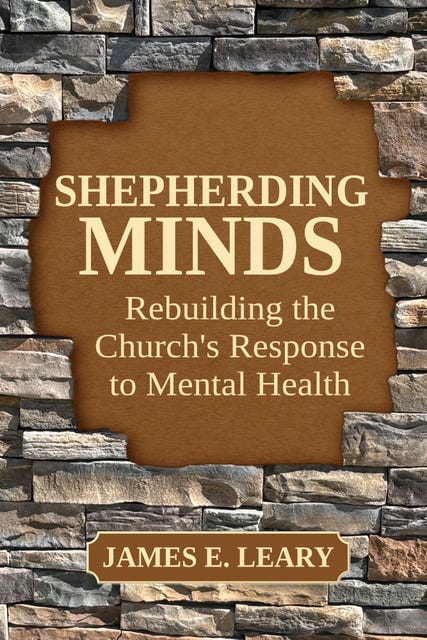
This book is for you if you carry the weight of caring for others: pastors, elders, deacons, chaplains, counselors, care team volunteers. But it’s just as much for the church member sitting in the pew who’s noticed a friend pulling away, who’s sat with someone in the hospital and didn’t know what to say, who wants to help but is afraid of getting it wrong.
If you’ve ever been across from someone in the grip of anxiety, depression, grief, or trauma and felt your words run dry, this book was written for you.
Shepherding Minds won’t turn you into a counselor, and it isn’t trying to. What it offers instead is something we often skip past in our hurry to fix things: how to be present with someone in their pain, how to sit in the dark with them rather than reach for a light switch too soon, how to offer your attention as a gift rather than your advice as a solution. Drawing on Nehemiah’s work rebuilding Jerusalem’s broken walls, the book traces a hopeful, practical path toward rebuilding the walls of care in our churches, one attentive, prepared person at a time.
The eBook is available now. Get your copy here.
The paperback releases September 1, and pre-order details are coming soon. I’ll share the link the moment it’s live so you can be among the first to get a copy.
If someone comes to mind while you’re reading this, a pastor, elder, deacon, chaplain, counselor, or fellow church member who wants to grow in caring well for those carrying a mental health struggle, would you send this their way? You may be putting exactly what they need into their hands.
Thank you for your prayers, your encouragement, and your support along the way.
Leave A Voice Reflection
One of the unexpected joys of writing The Chaplain Writer Digest is hearing how these reflections meet people in the middle of real life. If something in this week’s edition encouraged, challenged, or stayed with you, I would be grateful to hear from you; a few honest words are more than enough. You can leave a brief 90-second voice message here or email me at jim@thechaplainwriter.com. And if you have not yet subscribed, I would be glad to welcome you into this growing community of weekly, freely offered reflections shaped by encouragement, perspective, and gospel-centered care.
About The Author
James E. Leary, D.Min. (Jim) is a hospice chaplain, former pastor, and author of Embracing Gethsemane: Navigating Life’s Darkest Moments, available on Amazon for readers who want to explore these themes more deeply. He writes weekly at The Chaplain Writer Digest, offering thoughtful spiritual reflections and practical encouragement for everyday faith.
Support the Work
If The Chaplain Writer Digest has encouraged you, strengthened your faith, or helped you better understand the hidden burdens people carry, I invite you to consider becoming a financial partner in this work through a voluntary pledge. Your support helps keep these weekly reflections free and accessible while also supporting the continued development of Shepherding Minds. This includes creating practical resources, training, and care-centered tools, as well as helping churches strengthen or establish shared-care ministries that put the book’s principles into practice. The Digest will remain free to everyone. Your pledge is not payment for content, but an investment in compassionate, gospel-shaped care that can equip pastors, strengthen churches, and help more people receive meaningful support within their faith communities.
📣 Share This With Someone
If today’s reflection encouraged you, consider forwarding it to a friend who might also benefit from the encouragement.
🛑 Disclaimer
This content is for inspiration and reflection and is not a substitute for professional counseling or mental health care. If you or someone you know is struggling, please reach out to a trusted professional.
© 2026 The Chaplain Writer LLC
Thanks for reading The Chaplain Writer Digest! Subscribe for free to receive new posts and support my work.
Amen