

Choosing Grace Over Judgment


Settle In
Welcome to this week’s edition of The Chaplain Writer Digest. Pour a cup of coffee or tea and settle in for a few minutes.
This week I’ve been thinking about how quickly judgment can rise in us and how quietly mercy often waits for room. James reminds us that “mercy triumphs over judgment.” That is not only a word to offer others. It is a word we may need to receive ourselves.
So today, let’s slow down with a cup of coffee or tea and make a little more room for grace.
What I’m Thinking
“For judgment is without mercy to one who has shown no mercy. Mercy triumphs over judgment.”
James 2:13
There are moments when judgment comes easily. It can happen after one brief conversation. Someone says something sharp, distant, awkward, defensive, or strangely cold, and before we know it, we have already written a small story about them in our minds.
They are selfish.
They are immature.
They are difficult.
They should know better.
Maybe they should. But maybe there is more there than we can see.
James writes, “Mercy triumphs over judgment.” But that sentence does not stand by itself. It comes after James reminds us of the “royal law” from Scripture: “You shall love your neighbor as yourself.” It comes after his warning against partiality. It comes after he reminds us that we cannot pick and choose the parts of God’s law that are convenient for us. The same God who commands purity also commands love. The same God who calls us away from sin also calls us away from contempt.
So James is not inviting us into a soft, sentimental mercy that ignores truth. He is calling us into a Christlike mercy that fulfills the law of love.
That matters.
Because mercy does not mean sin is unimportant. Mercy does not mean wisdom is unnecessary. Mercy does not mean discernment should be abandoned. James is clear that we are to “speak and act as those who are to be judged under the law of liberty.” Our words matter. Our actions matter. Our treatment of others matters. We are not free to be harsh simply because we are right. We are not free to withhold compassion simply because someone else is wrong.
The people standing in front of us are rarely as simple as our first reactions make them seem. Most of us are carrying things we have not named out loud.
There is the person who smiles but feels unseen. The caregiver who has no energy left by the time everyone else’s needs are met. The pastor or elder who is tired of carrying pain that no one else knows about. The parent who sits in the driveway for a few extra minutes before going inside. The chaplain who leaves one hard visit and drives quietly to the next. The grieving person who keeps functioning because life does not stop long enough for sorrow to catch up.
And somewhere in all of that, someone says, “I’m fine.” But they are not really fine.
This is where many of us struggle. At least, I do. Judgment often feels efficient. It lets us move quickly. It protects us from the complexity of another person’s story. It gives us the appearance of clarity without requiring the labor of love.
Grace requires more patience. Mercy asks us to pause long enough to wonder what we do not know.
The truth about God in James 2:13 is this: God’s mercy is stronger than our judgment.
But His mercy is not careless. God does not show mercy because He overlooks truth. He shows mercy because He sees the whole truth and still moves toward us with compassion. He knows the hidden motives. The wounds beneath the reaction. The fear behind the defensiveness. The shame beneath the silence. The exhaustion behind the irritability.
And still, He does not meet His people first with contempt. He meets us with mercy.
We see this most clearly in Jesus.
Jesus perfectly fulfilled the royal law. He loved His neighbor as Himself. More than that, He gave Himself for His neighbors, even when His neighbors became His enemies. His life was not governed by favoritism, contempt, or self-protection. He moved toward the overlooked. He touched the untouchable. He welcomed people others had already dismissed.
He was not naïve about sin. He never treated evil as harmless. He called people to repentance. He told the truth. He exposed hypocrisy. But He was never hurried in His mercy. He looked at people long enough to see more than their worst moment.
He saw Zacchaeus in the tree.
He saw the woman at the well beneath all the labels attached to her.
He saw the grieving sisters outside Lazarus’s tomb and entered their sorrow before He spoke resurrection into it.
He saw Peter after his denial and restored him rather than discarding him.
And on the cross, surrounded by mockery and violence, mercy still had the final word.
“Father, forgive them.”
This is not merely an idea about kindness. This is the heart of Jesus.
Jesus is the One who bore judgment so mercy could triumph. He did not set aside righteousness. He fulfilled it. He did not pretend sin did not matter. He carried it. At the cross, truth and mercy did not compete with each other. They met in the self-giving love of the Son of God. That kind of mercy should shape the way we see people.
It also matters deeply for the inner life. A weary soul often needs safety before it can receive instruction. Shame rarely changes because someone was scolded hard enough. Anxiety does not usually quiet because someone says, “Just trust God more.” Grief does not move on command. The body often carries what the heart has not had words to say.
Sometimes grace begins with making room. I think of a table with one more place setting. Not because everything has been resolved. Not because the conversation will be easy. Not because there are no hard things to address. But because someone has decided that mercy will have a seat before judgment takes over the room.
Maybe that is one small way we practice James 2:13 this week.
Before responding, pause.
Before assuming, pray.
Before deciding what someone’s problem is, remember that there may be a burden you cannot see.
This does not mean you abandon truth. It means you let mercy carry truth in a way that sounds like Jesus.
So perhaps this week, ask one person, “How are you really doing?” Then give them enough room to answer honestly.
No rushing.
No fixing.
No correcting before listening.
A small mercy is still mercy. And in the kingdom of God, mercy does not silence truth. Mercy carries truth with the self-giving love of Christ.
Mercy gets the last word because, in Jesus, mercy has already triumphed.
Questions to Sit With
Where am I most tempted to judge quickly before listening carefully?
Who in my life may be carrying an invisible burden I have not taken time to notice?
How has God shown me mercy in places where others may have only seen my weakness, failure, or struggle?
What would it look like this week to let mercy have the first word in one conversation, relationship, or response?
A Gentle Invitation
This week, choose one person who may be carrying more than they are saying.
Send the text.
Make the call.
Ask the second question.
Sit a little longer.
Listen without rushing to correct, advise, or explain. Let mercy have the first word.
And if this reflection encouraged you, consider sharing it with someone who may need a little more grace than judgment this week.
Closing Prayer
Lord, help me choose mercy before judgment. Slow my reactions, soften my heart, and teach me to see people as You see them, with truth, patience, and compassion. Where I am weary, meet me with Your mercy, and where others are weary, help me become a quiet sign of Your grace. Let mercy have the first word in me. Amen.
Benediction
May the mercy of Christ quiet my judgments, soften my words, and steady my heart. May I remember that every person I meet is carrying more than I can see, and may grace have the first word in me before judgment has a chance to speak.
Amen.
Song to Sit With
Paul Baloche’s “Your Mercy” fits beautifully with James 2:13, “mercy triumphs over judgment,” because the song keeps bringing us back to the steady, undeserved mercy of God. It reminds us that God does not meet us first with condemnation, but with compassion, forgiveness, and welcome. As you reflect on mercy having the final word, this song gives you a simple way to respond: not by defending yourself, but by resting in the mercy that is greater than your sin, your shame, and your tendency to judge others.

Shepherding Minds addresses this concern by showing that compassion alone is not always enough. Good intentions can still minimize pain, offer simplistic answers, ignore warning signs, or fail to connect someone with the help they need. The book helps churches train caring people to listen wisely, respond carefully, respect boundaries, reduce stigma, and know when to involve professional support. In short, it helps compassion become safer, wiser, and more faithful.
Shepherding Minds eBook Now Available for Pre-Order
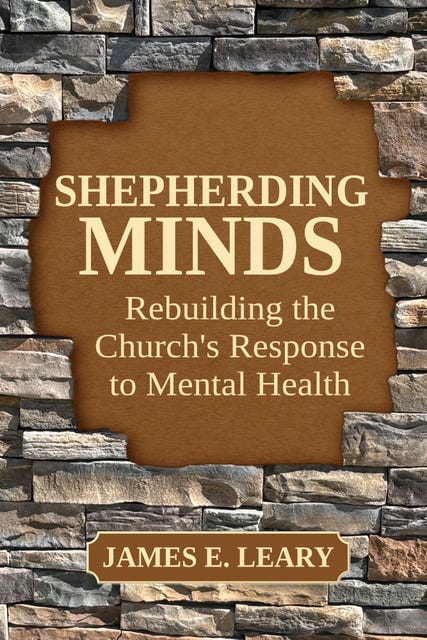
The Shepherding Minds eBook Is Now Available for Pre-Order!
This book is written for pastors, church leaders, care teams, chaplains, and compassionate Christians who want to respond more wisely when people in their churches are struggling with anxiety, depression, grief, trauma, or other mental health challenges.
Shepherding Minds offers practical guidance for caring with greater wisdom, compassion, and confidence. It also follows the story of Nehemiah as a model for rebuilding the broken walls of care around those who are hurting in our churches.
Pre-ordering helps build early momentum and gives this message a greater opportunity to reach churches, leaders, and people who need help and hope. The eBook will be delivered on August 1.
Pre-order your copy here.
The paperback edition will also be available soon. Thank you for your prayers, encouragement, and support.
Leave A Voice Reflection
One of the unexpected joys of writing The Chaplain Writer Digest is hearing how these reflections meet people in the middle of real life. If something in this week’s edition encouraged, challenged, or stayed with you, I would be grateful to hear from you; a few honest words are more than enough. You can leave a brief 90-second voice message here or email me at jim@thechaplainwriter.com. And if you have not yet subscribed, I would be glad to welcome you into this growing community of weekly, freely offered reflections shaped by encouragement, perspective, and gospel-centered care.
About The Author
James E. Leary, D.Min. (Jim) is a hospice chaplain, former pastor, and author of Embracing Gethsemane: Navigating Life’s Darkest Moments, available on Amazon for readers who want to explore these themes more deeply. He writes weekly at The Chaplain Writer Digest, offering thoughtful spiritual reflections and practical encouragement for everyday faith.
Support the Work
If The Chaplain Writer Digest has encouraged you, strengthened your faith, or helped you better understand the hidden burdens people carry, I invite you to consider becoming a financial partner in this work through a voluntary pledge. Your support helps keep these weekly reflections free and accessible while also supporting the continued development of Shepherding Minds. This includes creating practical resources, training, and care-centered tools, as well as helping churches strengthen or establish shared-care ministries that put the book’s principles into practice. The Digest will remain free to everyone. Your pledge is not payment for content, but an investment in compassionate, gospel-shaped care that can equip pastors, strengthen churches, and help more people receive meaningful support within their faith communities.
📣 Share This With Someone
If today’s reflection encouraged you, consider forwarding it to a friend who might also benefit from the encouragement.
🛑 Disclaimer
This content is for inspiration and reflection and is not a substitute for professional counseling or mental health care. If you or someone you know is struggling, please reach out to a trusted professional.
© 2026 The Chaplain Writer LLC
Thanks for reading The Chaplain Writer Digest! Subscribe for free to receive new posts and support my work